

18th Machine Learning and Advanced Statistics Summer School

Organized by the Artificial Intelligence Department of the School of Computer Science · Universidad Politécnica de Madrid
General Information
The MLAS is an intensive set of courses providing attendees with an introduction to the theoretical foundations as well as the practical applications of some of the machine learning methods and the modern statistical analysis techniques currently in use. 12 courses of 15h each are offered during 2 weeks.
The courses are intensive and aim to introduce both the theoretical foundations and the practical applications of modern statistical analysis techniques. The students are free to choose the courses according to their interests, with the only restriction being that courses which are given in the same time block (e.g. C01 and C02; C03 and C04;…) are mutually exclusive.
A leaflet summarizing the information is available here.
Goals and Prerequisites
Academic interest: This summer school complements the background of students from a variety of disciplines with the theoretical and practical fundamentals of those modern techniques employed in the analysis and modelling of large data sets.
Scientific interest: Any scientist, regardless of her field (whether engineering, life sciences, economics, etc.) is confronted with the problem of extracting conclusions from experimental data. The summer school supplies practitioners with the sufficient resources to be able to select the appropriate analysis technique and to apply it to their specific problem.
Professional interest: The application of machine learning and modern data analysis is widespread in the industry — it is practically needed in nearly all disciplines. There are plenty job offers in the field: a Glassdoor.com search as of January 2025 retrieves over 30,000 offers for ‘machine learning’ and over 17,000 offers for “data science”, all within the USA only.
The goal of this summer school is to complement the technical background of attendees in the field of data analysis and modelling. The courses are open to any student or professional wanting to enrich her knowledge of a topic that is more and more involved in nearly all productive areas (Computer Science, Engineering, Pharmacy, Medicine, Economics, Statistics, etc.). A second goal is to get the student acquainted with a set of computational tools for applying the learned techniques. This may involve tackling practical problems from the student’s own work environment, i.e., working with a student’s own data set.
Note that summer school covers advanced techniques that, nearly by definition, are not mathematically trivial. Although emphasis is placed on their use and not on the underlying mathematics, attendees should not be afraid or surprised of seeing some mathematics. Teachers will, nonetheless, aim to make the course content accessible to students from all backgrounds. To make course attendance easier, the student is supposed to be familiar with certain concepts that are described as “prerequisites” and she is encouraged to read the “before attending documents” in order to benefit from the course as much as possible.
Programme
All classes will be given in English. Each course has theoretical as well as practical hours, in which the techniques are put into practice with software. Students should bring their own laptops with the software required for the practical sessions. Free wireless connection will be available.
Univ. Politécnica de Madrid
Univ. Politécnica de Madrid
Linköping University
Univ. Autónoma de Madrid
CUNEF Universidad
Linköping University
Univ. CEU San Pablo
Univ. Politécnica de Madrid
Univ. Autónoma de Madrid
Prices
The price for each one of the 12 courses is:
| Category | Early — by May 31 | Regular — after May 31 |
|---|---|---|
| Academia | 300€ | 350€ |
| Industry | 425€ | 475€ |
Tuition fees include attendance to lectures and educational materials.
Fees will be independent from the number of enrolments.
Registration
Courses have a maximum attendance of 40 people whereas courses with less than 6 people will not be opened (we have an average of 20 students per course, and this is very unlikely to happen). For each attended course, the student will get an assistance certificate signed by school coordinators. Course places will be filled in strict order of payment date.
Note that enrollment is only possible until Wednesday, June 3rd at 18:00 (CET) for week one courses and Wednesday, June 10th at 18:00 (CET) for week two courses.
The application process is very simple. Unless otherwise stated here, all the courses have open places. To apply for one course or a set of courses, the student should make the correspondent payment and report their personal data to the organization by email (mlas@fi.upm.es). These data must comprise the following items:
- Full name, e-mail, institution and nationality
- Passport number (or national ID card number if passport is n/a)
- List of course(s) you want to enroll
- Attachment with the wire transfer proof for the total amount of fees (preferably in PDF format)
- [Optional] If you are a member of AEPIA or SEIO, then a proof of active membership. A proof of membership quota payment can do.
The bank details for the payment are as follows:
🏦 Bank Transfer Details
When carrying out the payment, make sure that you cover the wiring expenses (if any), so that the amount transferred to our account matches the corresponding course fees exactly. If not, we will ask you to wire the remaining amount. Once all the information is validated, the student will receive a confirmation email.
We can prepare a proforma and/or formal invoice for the registration. We would need the student’s registration data (e.g., name, courses to enroll into, etc.) as well as institution name, VAT and address.
Cancellation and Changes
It is only possible to cancel enrollment in a course for medical reasons or a rejected visa application, and only before that course begins.
If a student would like to replace one course with another, he or she must request this before Wednesday 14th for week one courses and Wednesday 21st for week two courses. We will evaluate each request and attempt to grant it, but there might be restrictions and we cannot provide guarantees.
Logistics for Attendants
Venue
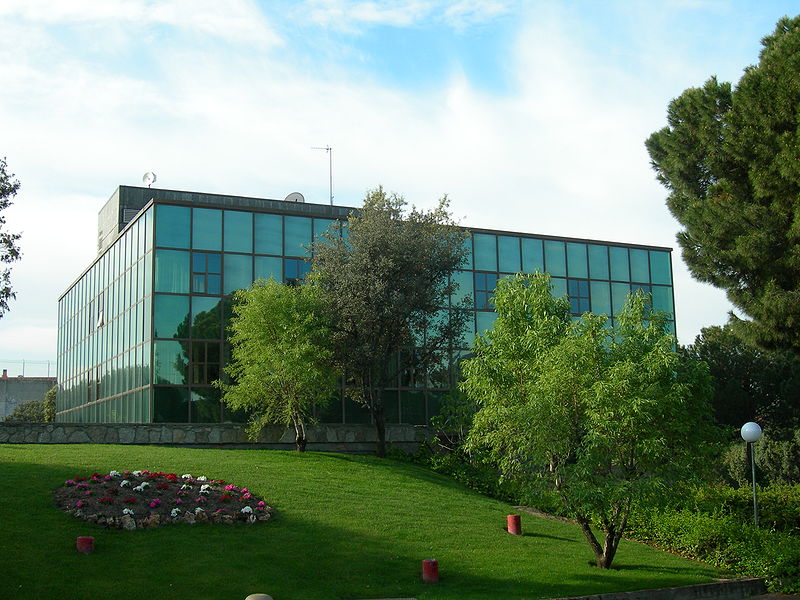
The Machine Learning and Advanced Statistics Summer School takes place at UPM’s School of Computer Science, located at the Montegancedo campus, in Madrid’s Boadilla del Monte municipality, some 20 kilometers from downtown Madrid. The campus is well connected with central Madrid, via light rail line and multiple buses lines.

Course Materials, Practical Sessions and Classrooms
Course materials will be sent on the Wednesday prior to course kick-off, that is, on Wednesday 18th for week one, and Wednesday 25th for week two. On the following day, the professors will send the instructions for installing the required software. In exceptional cases this may happen earlier, if the professor considers that the amount of software to be installed is substantial.
Students need to bring their own laptops with the software required for the practical sessions of the courses. Free wireless connection will be available. We will provide data for wifi access on the first day of classes. Eduroam is available. Note that recording the classes, either in audio or in video format, is not allowed.
The courses will be held in the following classrooms:
6201 and 6202 are located in Bloque 6 (see campus map).
Accommodation
The Machine Learning and Advanced Statistics Summer School does not provide lodging. The EXE Pozuelo and the Eurostars i-Hotel are near-by, located halfway between the campus and Madrid and are reachable from campus with a ten-minute bus ride. The TH Boadilla and La Cabaña are also relatively close but not so well connected to campus by public transport. Students also stay around the Principe Pio area in downtown Madrid. It is centric and well-connected, with the commute to campus taking around 40 minutes. One option is the Príncipe Pío. Budget options in downtown Madrid include The Hat and Fuencarral Adeco hostels.
Exe Pozuelo and Eurostars i-Hotel, as well as TH Boadilla, might be preferable if you will follow many courses and will have little time for other activities besides attending the summer school. Lodging near Principe Pio, on the other hand, makes it easier for you to enjoy Madrid during your stay.
Reaching Campus
You can reach the Montegancedo campus by buses 571, 573, 591, and 865 and by light rail line ML 3. The buses are faster than the light rail and leave you at campus or very close to it, while the light rail station is about one kilometer from campus.
From Exe Pozuelo: You can catch the 571 bus in front of the hotel and the light-rail at the José Osbert ML 3 station.
From Madrid:
- Colonia Jardín (metro line 10): Catch buses 571, 573 and 591 here. Also ML3 Colonia Jardin station.
- Moncloa (metro lines 6 and 3): Catch the 865 and the 573 here.
- Aluche (metro line 5): Catch the 591 here or the 571 here.
Getting off at campus: Buses 591 and 865 leave you on campus — with 591 get off at the last station; with 865 at next-to-last (‘Facultad de Informática’). With 571 or 573, get off at ‘Facultad de Informática’ and walk to entrance. By light-rail, walk 1.4 km: turn right and walk down Avda. Montepríncipe.
Click here for a detailed campus map and surroundings.
Bus timetables (Madrid → Campus): 571 · 573 · 591 · 865 | Campus → Madrid: 571 · 573 · 591 · 865
Note: for 571 and 573 timetables differ in June and July — look for ‘Vigente Julio’ for July, ‘Vigente de 1 de septiembre a 30 de junio’ for June.
Tickets: Single trip for 591, 865 and light rail: 2€ / 10-rides: 12.20€. Single ride for 571 and 573: 2.60€ / 10-rides: 16.10€. See redtransporte.com (in Spanish).
Further information: Madrid underground: metromadrid.es · Madrid transport: crtm.es
Eating at Campus
The cafeteria is located in Bloque 3 (see campus map). It opens from 8:00 to 20:00 and serves sandwiches, salads, drinks, hamburgers, and other dishes.
Lunch is served from 13:00 to 16:00. The self-service menu includes a starter, a main dish, a dessert and bread for 7€ (8.50€ if you include a drink). All payments are carried out directly at the cash register and with card only; cash is not accepted.
There are microwave ovens that you can use if you want to bring your own food.
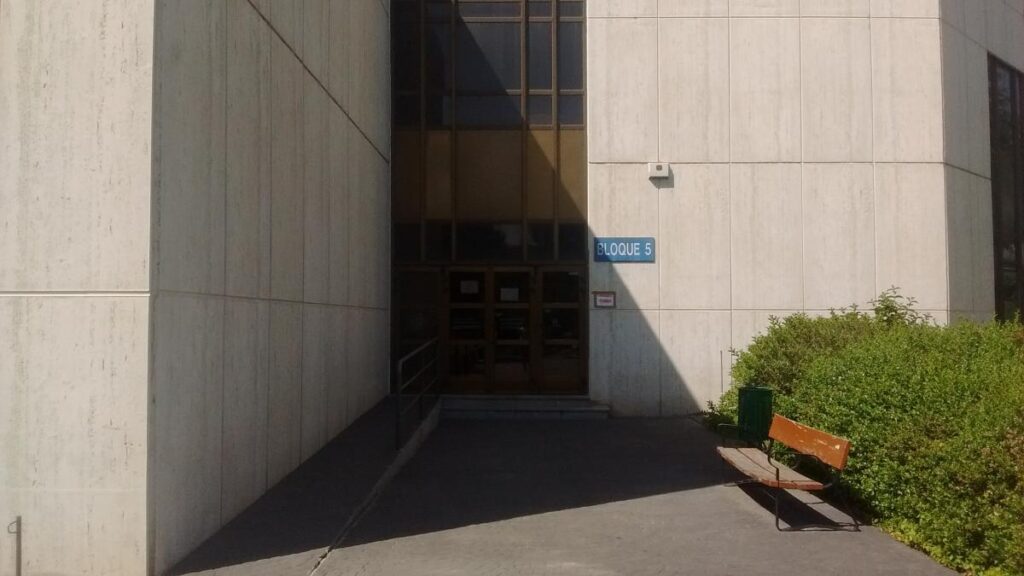
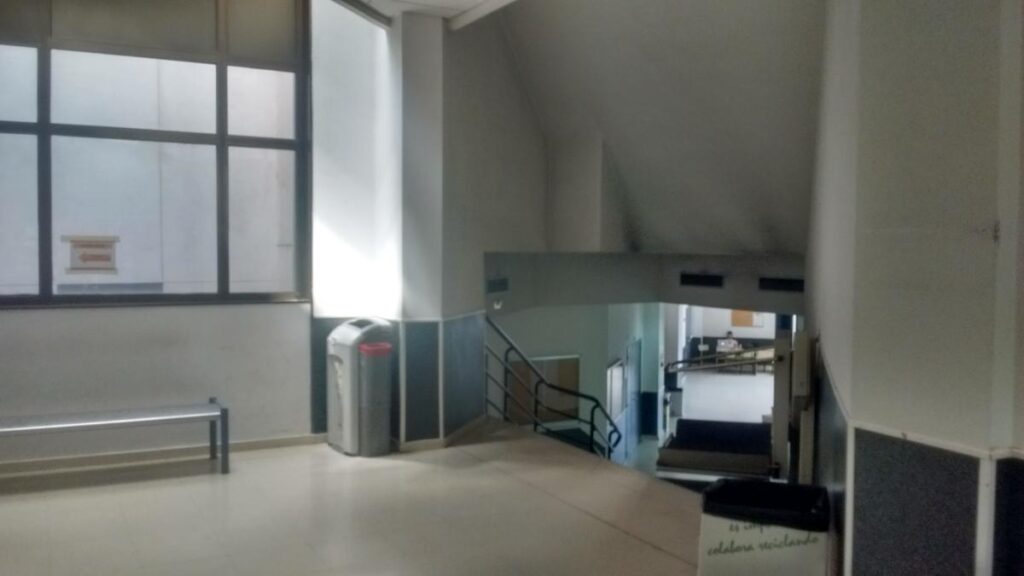
Services at campus: Some of the services provided on campus, such as study rooms, are listed here. The library and study rooms are located in Bloque 1. The preferred entrance to the building is via Bloque 5.
Contact
👥 School Staff
School coordinators:
Bojan Mihaljević and Laura Gonzalez Veiga
Tel.: +34 91 067 3093
mlas@fi.upm.es
School directors:
Pedro Larrañaga · Tel.: +34 91 067 2896
Concha Bielza · Tel.: +34 91 067 2883
📍 Address
Escuela Técnica Superior de Ingenieros Informáticos
Universidad Politécnica de Madrid
Campus Montegancedo s/n
28660 Boadilla del Monte, Madrid
Spain
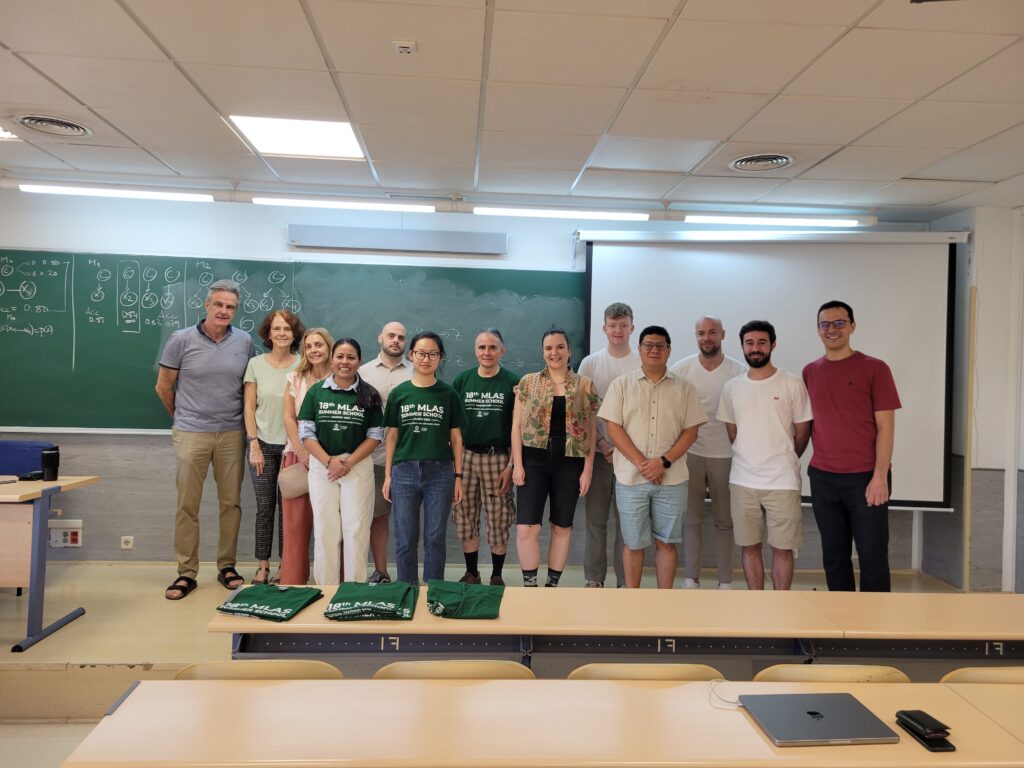
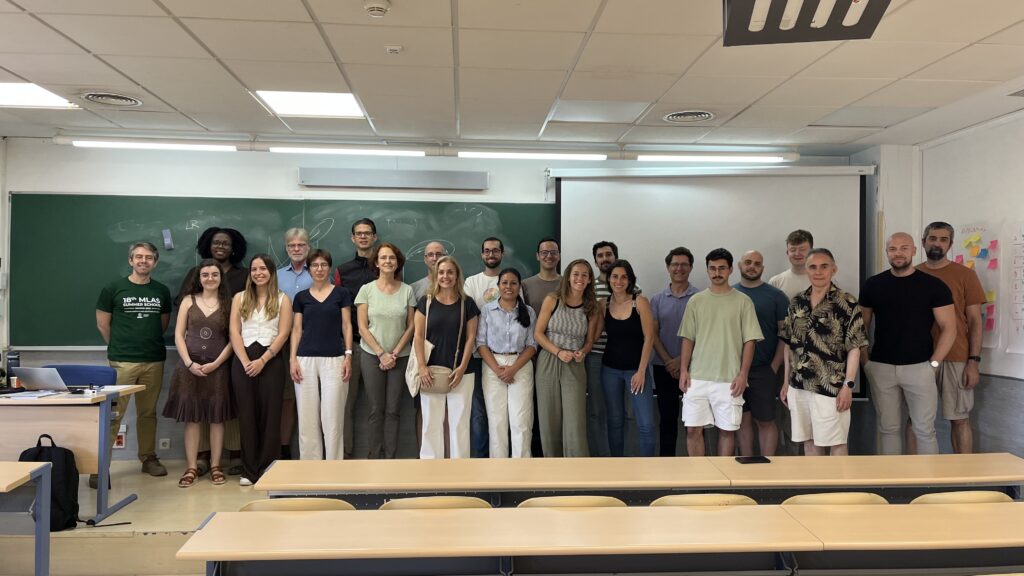
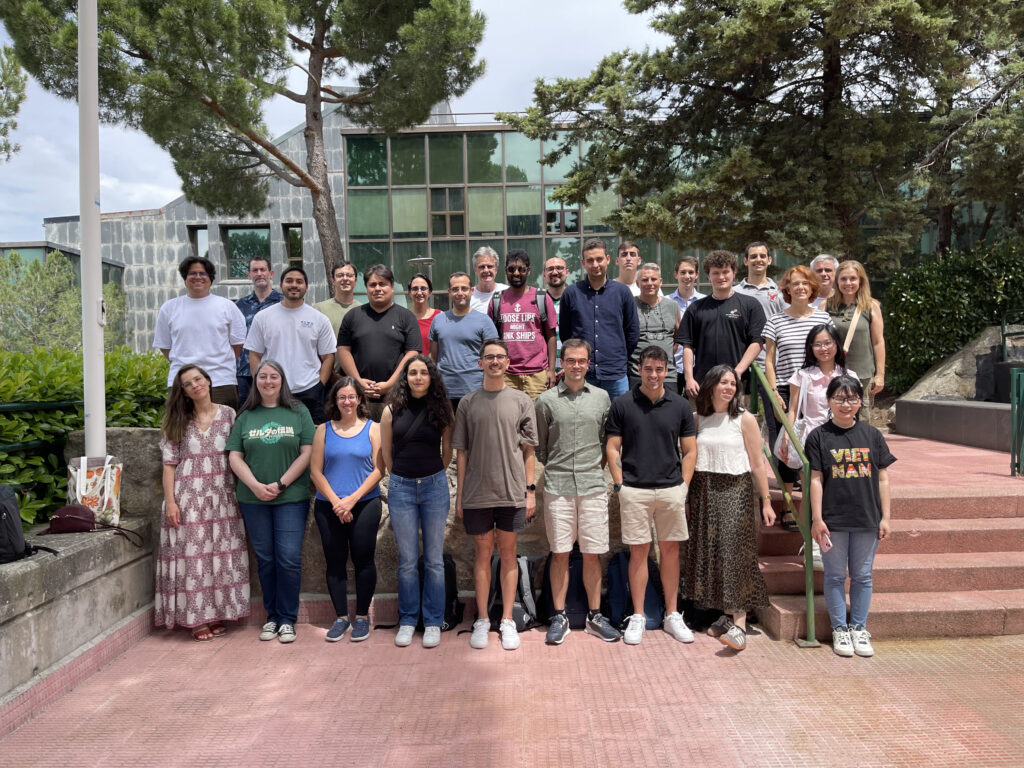
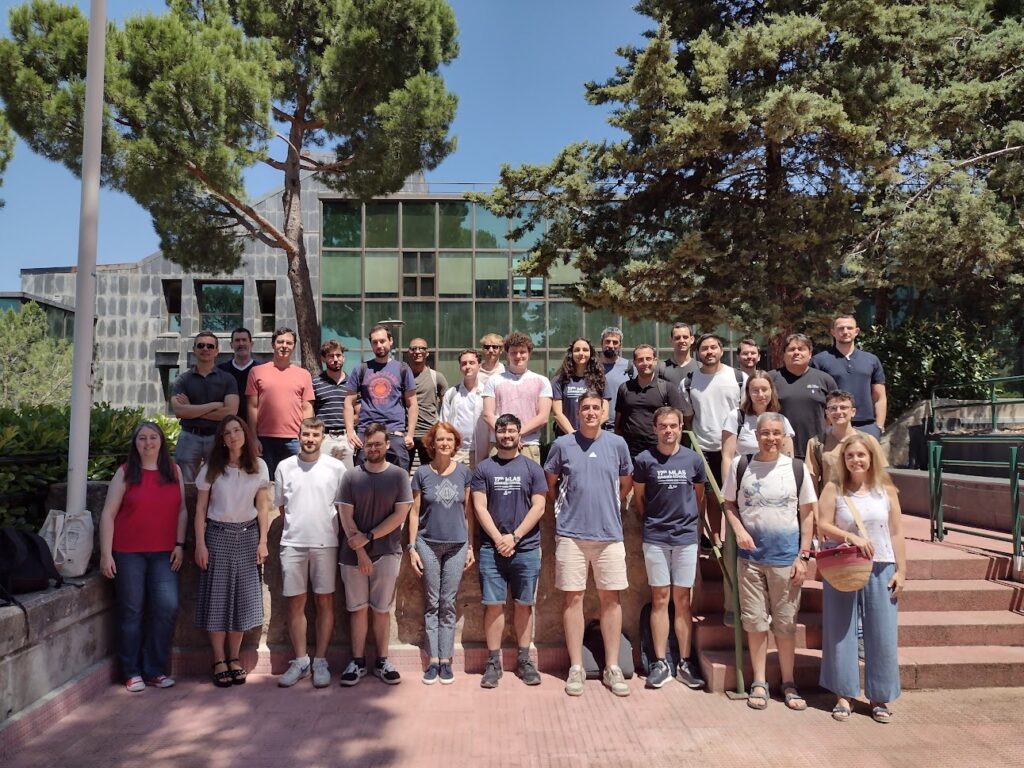
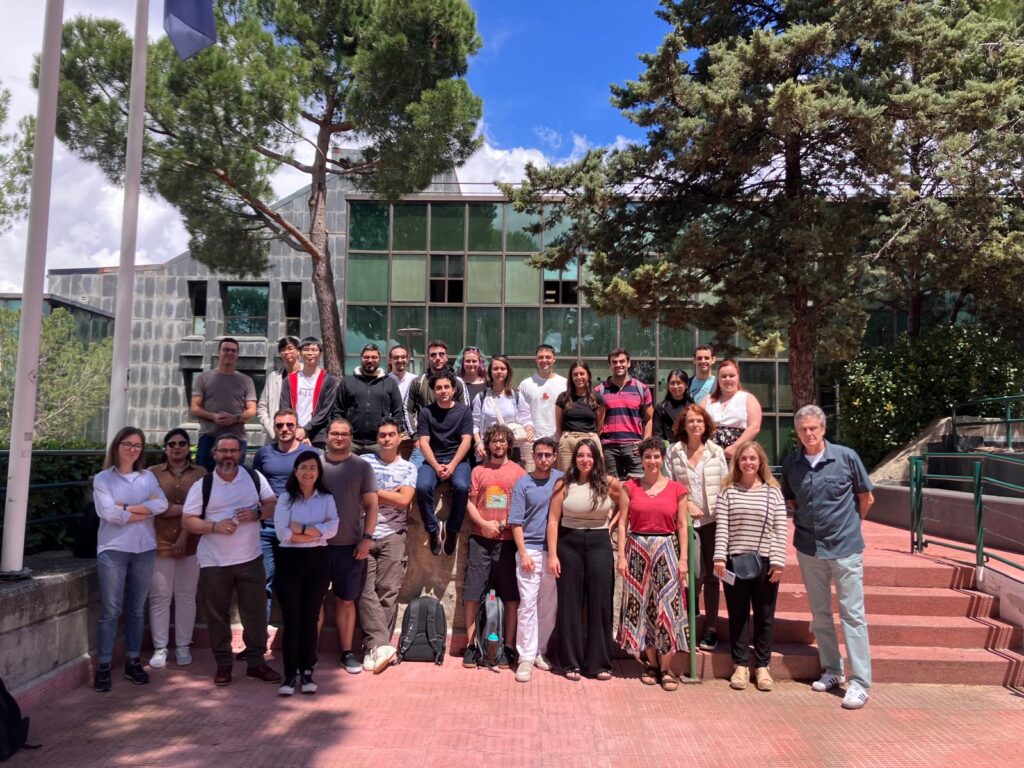
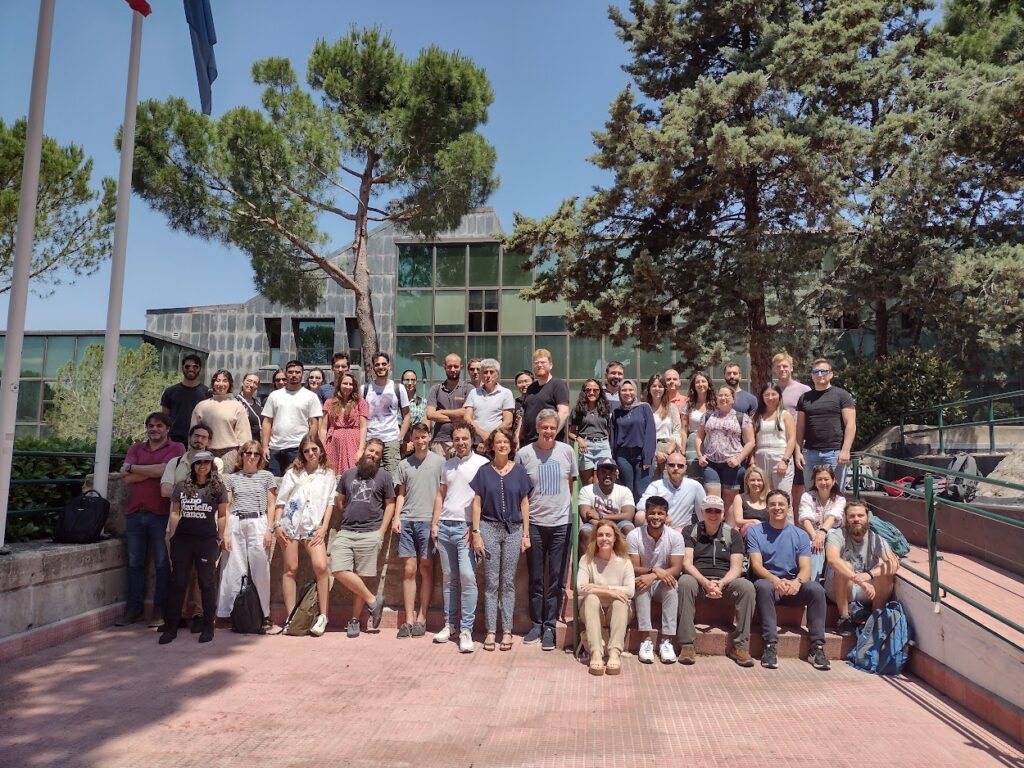
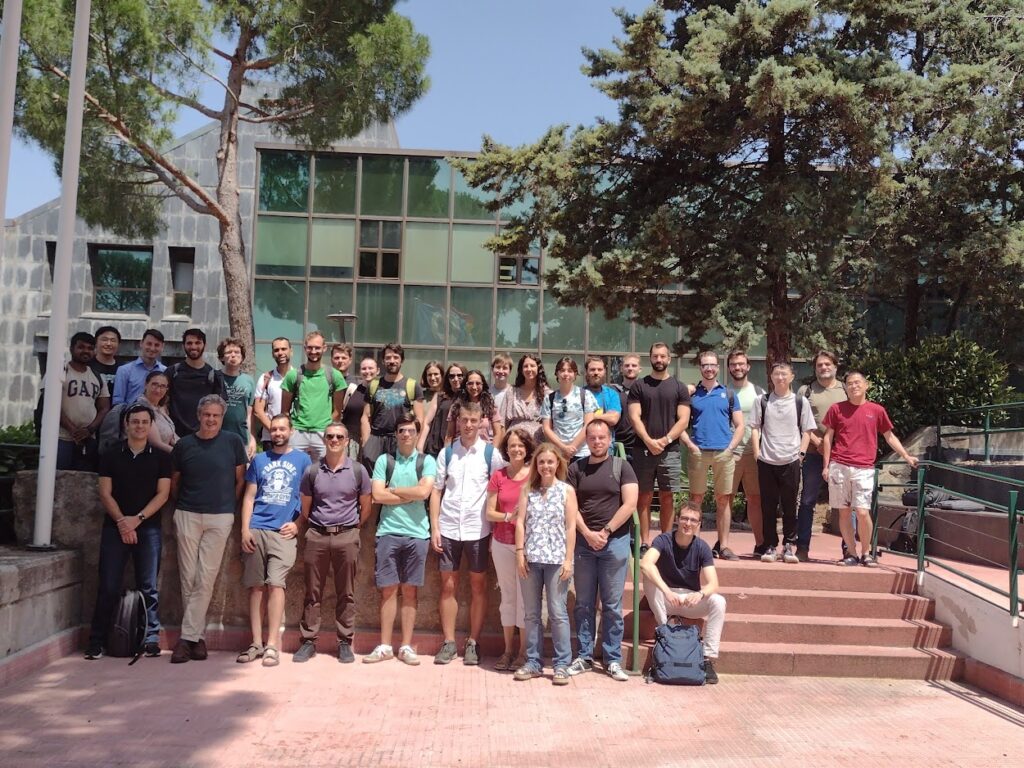
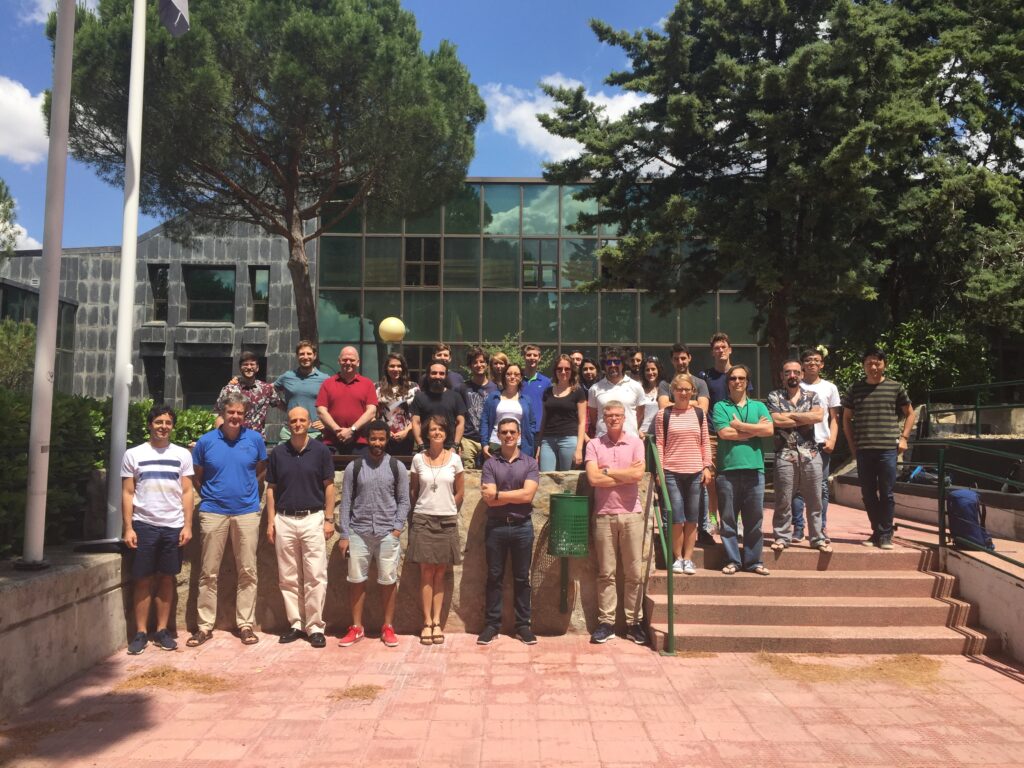
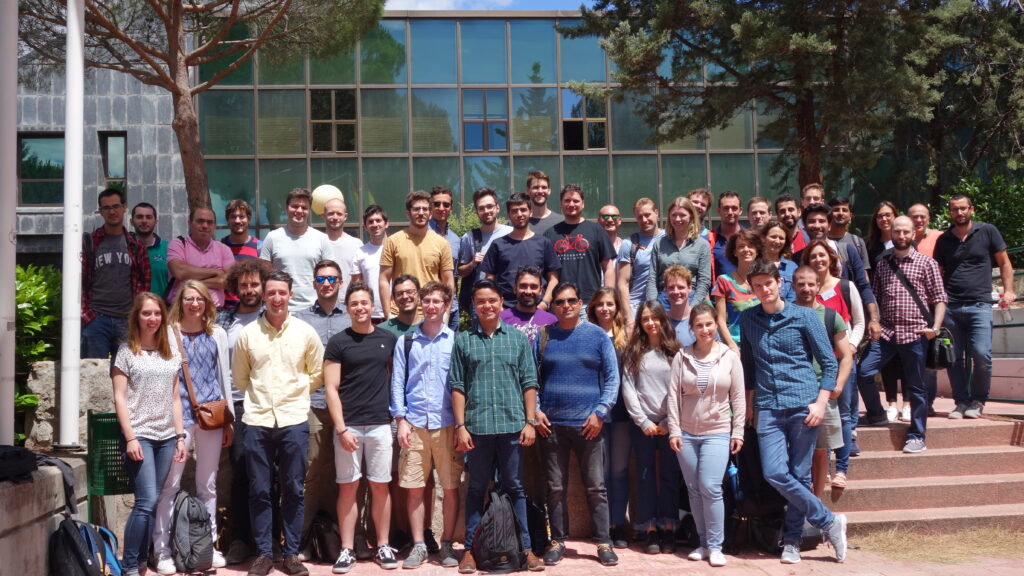
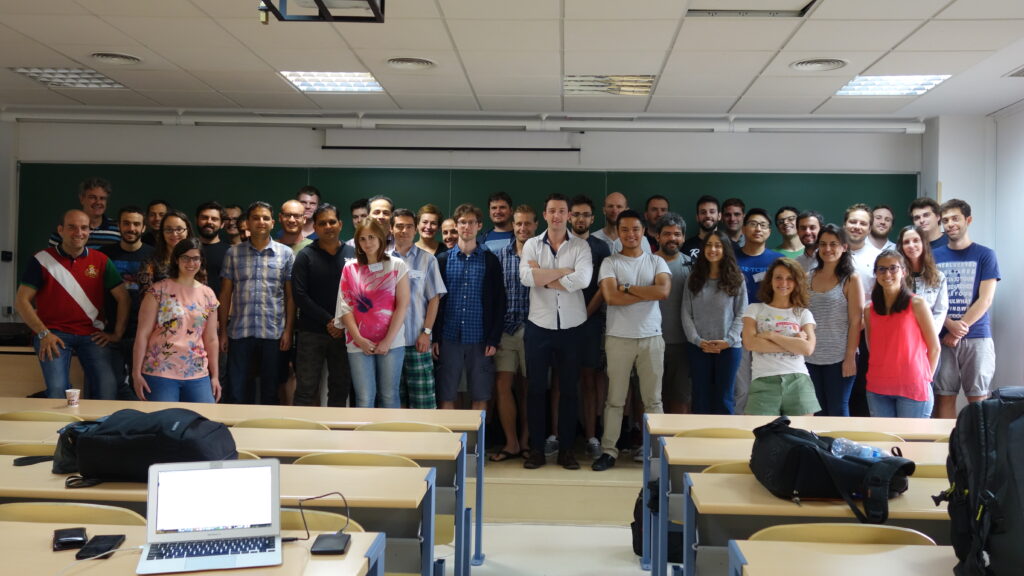
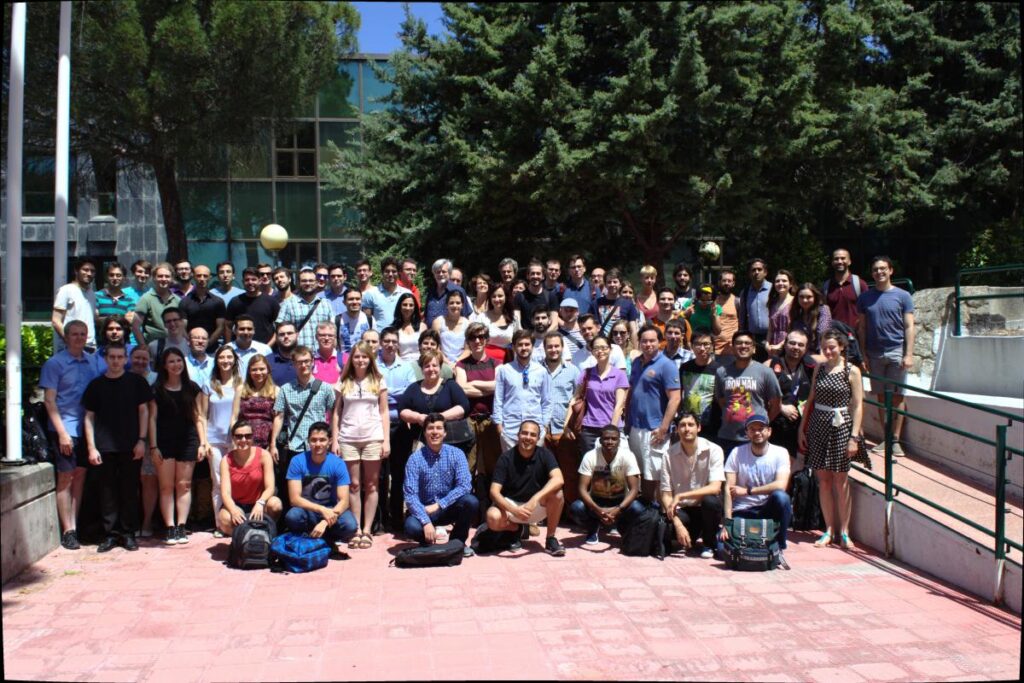
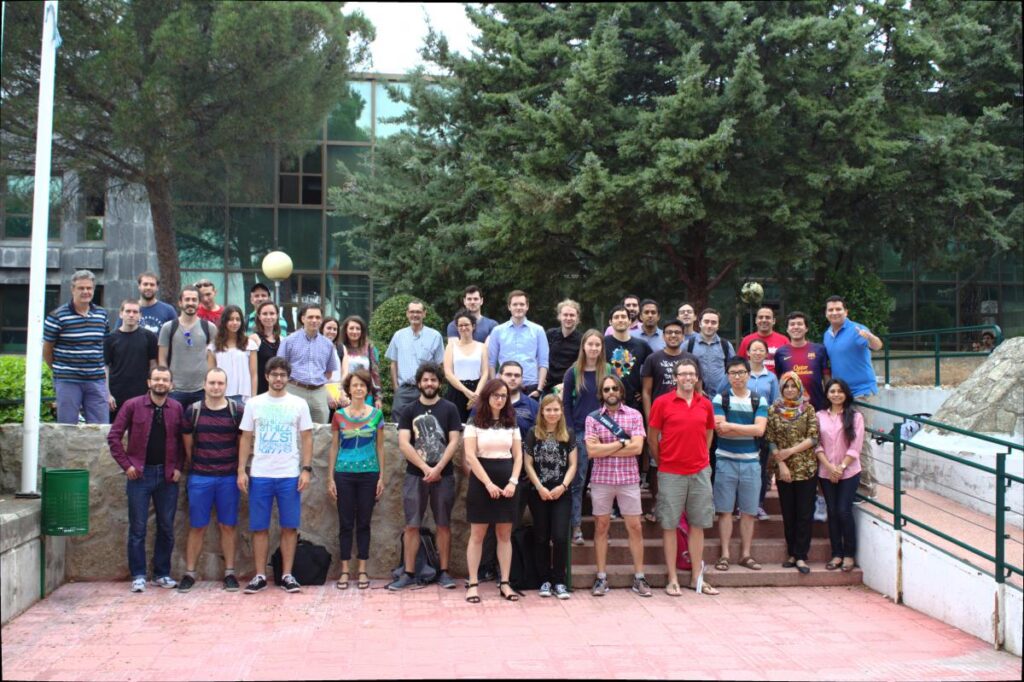
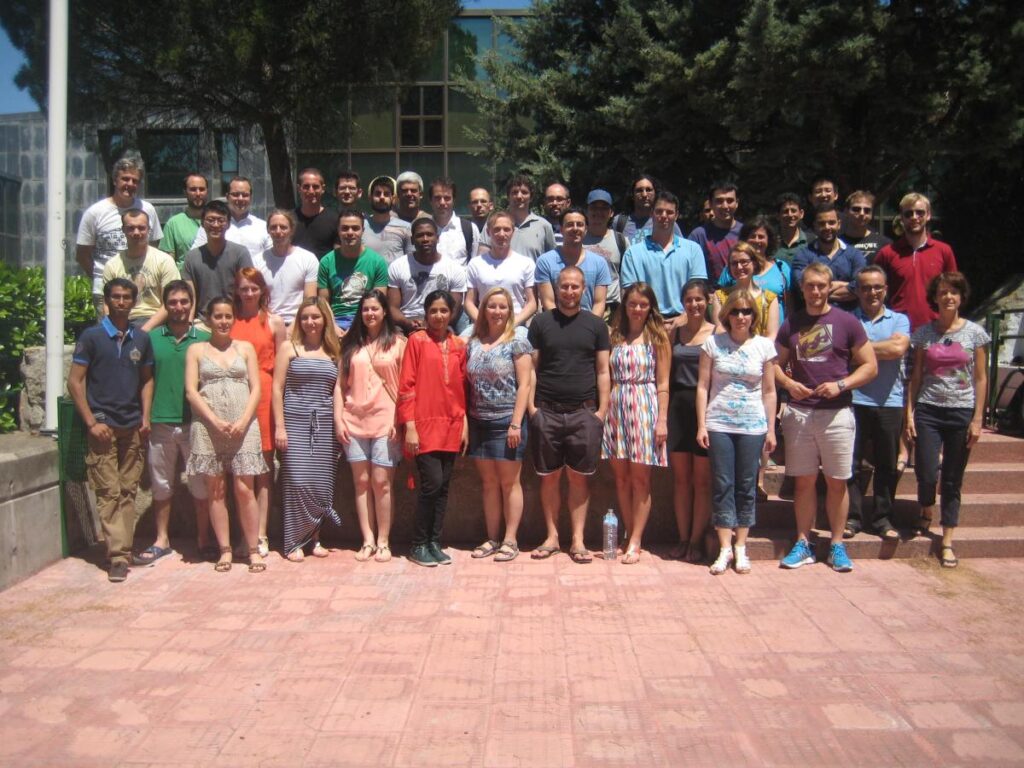
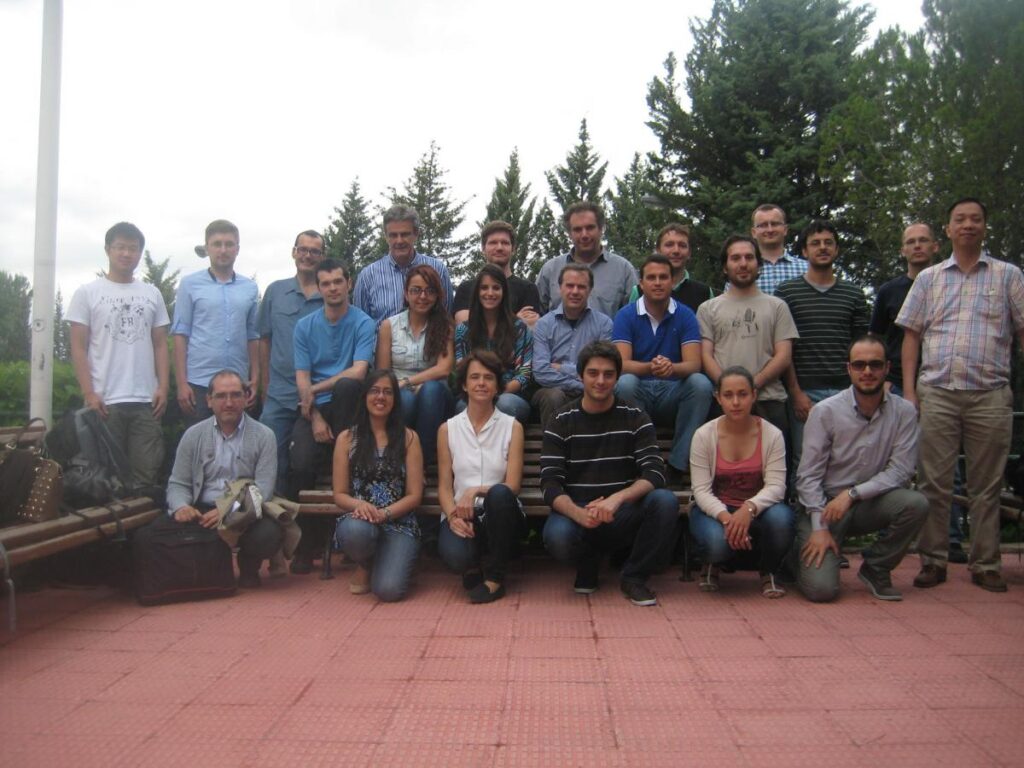
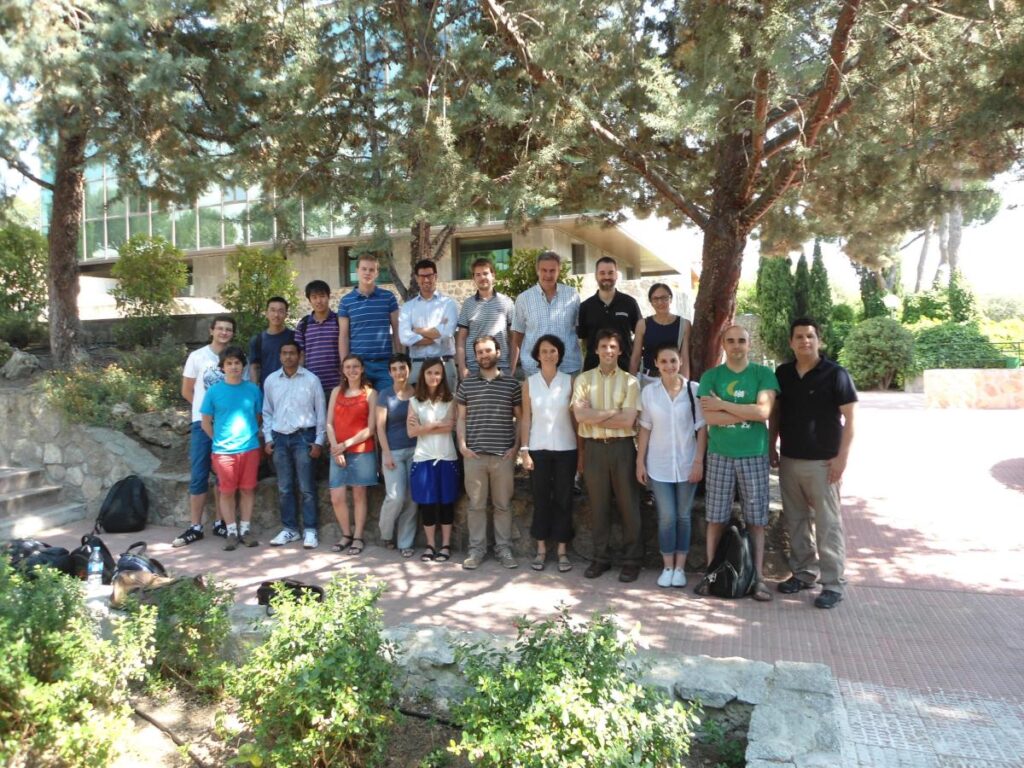
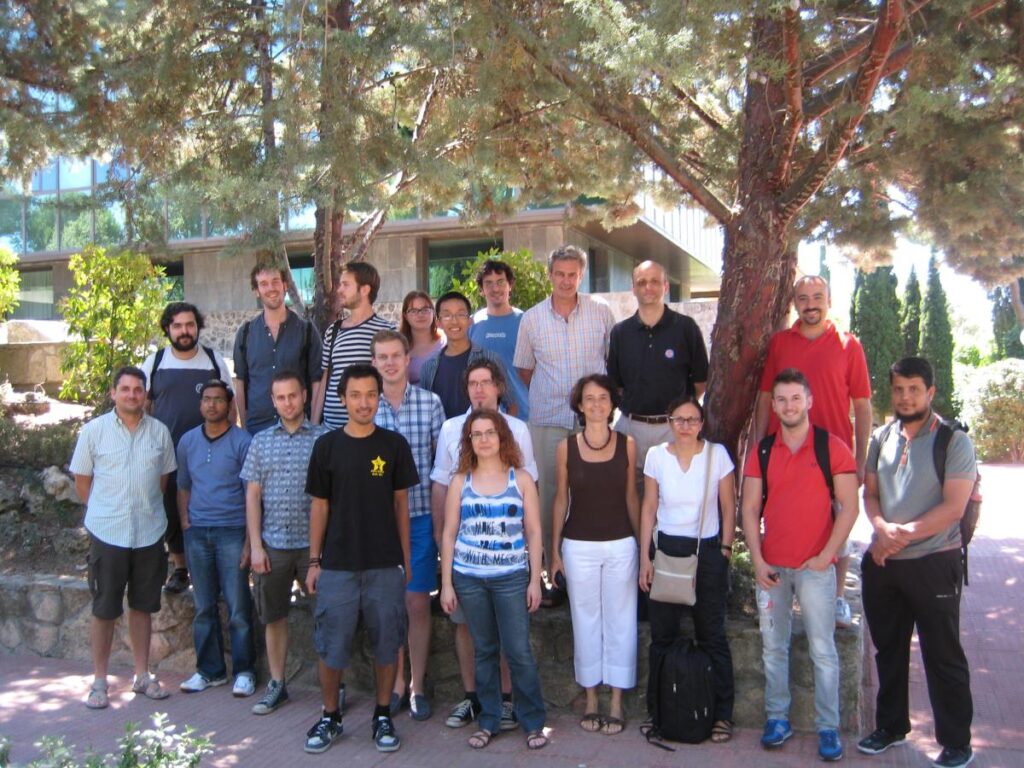
Previous Editions Photographs